
Blooming Biodiversity: Our North Yorkshire BNG Wildflower Survey Reveals Woodland Wonders
Our North Yorkshire BNG Wildflower Survey is now out. It catalogues the flowers we experienced on our trips up to do maintenance work on our Chapel le Dale woodland habitat. if you want more information on the flowers we recommend visiting Wildflower Finder UK or https://bsbi.org/
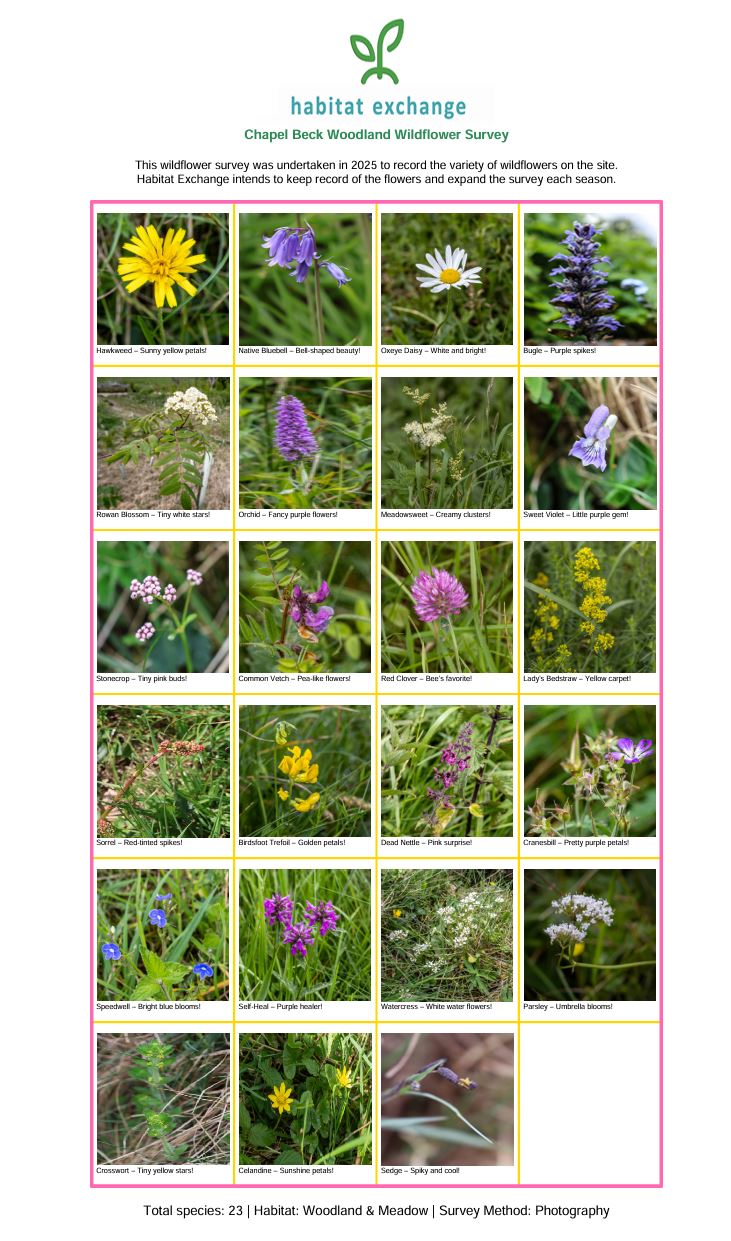
At the heart of our North Yorkshire woodland project, we’re doing more than planting trees—we’re nurturing a complete, thriving ecosystem. A core part of our Biodiversity Net Gain (BNG) commitment involves meticulously tracking the native flora that calls this habitat home. Our latest wildflower survey in Chapel Beck Woodland has revealed a spectacular array of 23 species, painting a vibrant picture of ecological health right here in North Yorkshire.
This ongoing survey isn’t just a snapshot; it’s a living record. We photograph and document each discovery season by season, demonstrating the tangible, positive impact of our habitat creation and a genuine commitment to exceeding BNG targets in North Yorkshire.
A Closer Look at Our Native North Yorkshire BNG Wildflowers
Each flower we find tells a story of resilience and natural beauty. Here’s what our survey has uncovered:
- Hawkweed: A sunny, dandelion-like flower that brings a splash of resilient yellow to meadows and banks.
- Native Bluebell: The iconic bell-shaped beauty that creates a breathtaking purple-blue carpet in our ancient woodland each spring.
- Oxeye Daisy: A classic meadow daisy with white petals and a golden centre, a vital nectar source for pollinators.
- Bugle: Spikes of deep blue flowers that form excellent ground cover in shady spots.
- Rowan Blossom: Clusters of tiny, creamy-white flowers on the Rowan tree, which will develop into bright red berries for birds.
- Orchid: A thrilling find indicating high habitat quality; our pine-scented purple varieties are a special treasure.
- Meadowsweet: Frothy cream flowers with a sweet, almond-like scent, often found in damp meadows.
- Sweet Violet: A delicate, fragrant purple flower that is one of the first bloomers in spring woodland.
- Stonecrop: A succulent with tiny, star-shaped flowers, thriving in dry, rocky areas and excellent for invertebrates.
- Common Vetch: A climbing plant with pretty pea-like purple-pink flowers, fixing nitrogen into the soil.
- Red Clover: A familiar grassland plant with round, red flower heads, loved by bumblebees.
- Lady’s Bedstraw: Creates a fragrant yellow carpet in meadows; historically used to stuff mattresses.
- Sorrel: Adds a splash of red-brown with its tall, slender flower spikes and tangy-tasting leaves.
- Birdsfoot Trefoil: A low-growing plant with clusters of bright yellow ‘pea’ flowers, often tinged with red.
- Dead Nettle: A non-stinging nettle with serrated leaves and pretty pink or white flowers.
- Cranesbill (Wild Geranium): Features beautiful pine-scented purple flowers and distinctive, beak-shaped seed pods.
- Speedwell: A small, creeping plant with charming bright blue flowers.
- Self-Heal: A low-growing plant with clusters of purple flowers, known for its historical medicinal uses.
- Watercress: Found in our clean freshwater streams, with clusters of small white flowers and edible, peppery leaves.
- Parsley: This wildflower variety adds lush, textured foliage and clusters of tiny white flowers to the woodland edge.
- Crosswort: A plant with tiny, pale yellow flowers arranged in a cross-like pattern around the stem.
- Celandine: One of the first heralds of spring, with glossy yellow, star-like flowers.
- Sedge: A grass-like plant that forms important tussocks in damp woodland, providing structure and shelter.
Why This North Yorkshire Wildflower Survey Matters for BNG
This remarkable diversity isn’t accidental. It results from careful habitat management. Each species, from the soil-nourishing Common Vetch to the pollinator-magnet Red Clover, plays a critical role. They support bees and butterflies, stabilise soil, and form the foundational layer of a robust food web. By achieving and demonstrating this flourishing native plant life, we directly contribute to North Yorkshire’s natural capital and deliver verifiable, high-quality Biodiversity Net Gain.
Join Us on Our Journey
We will expand this survey every season, watching as our North Yorkshire woodland evolves into an even richer sanctuary for wildlife. Explore our project to see how responsible development works hand-in-hand with nature, creating lasting legacies for North Yorkshire’s landscape.
Contact Us for more information
If you need BNG in North Yorkshire contact us today via Habitat Exchange Contact Us Page
If you need BNG elsewhere in the UK please come and see our Broker Service at HabExchange.co.uk